

.svg)

Hope Squad: A Proven, Life-Saving Prevention Program
The data is clear: Hope Squad is making a difference.
Midway through the school year, Hope squad Advisors, administrators, principals, and mental health professionals on campuses across the country are reporting measurable improvements in student connectedness, mental health awareness, and peer support–all core indicators of a healthy school culture.
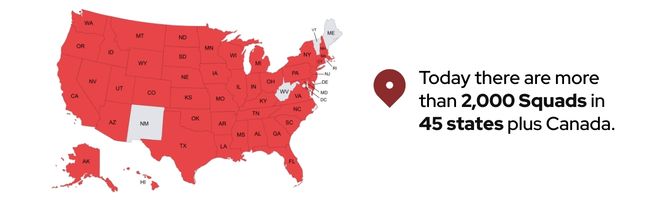
The results reaffirm what educators know: Prevention works best when communities invest in early identification and student-led support systems.
Measurable & scalable impact
Since the start of the 2025-2026 school year, Hope Squad programming has reached an estimated 1,206,400 students through lessons, activities, and peer support initiatives. More than 64,480 trained Hope Squad Members are actively engaged nationwide, having received training in evidence-aligned gatekeeper skills that empower them to notice concerns, offer age-appropriate support, and connect peers to trusted adults.
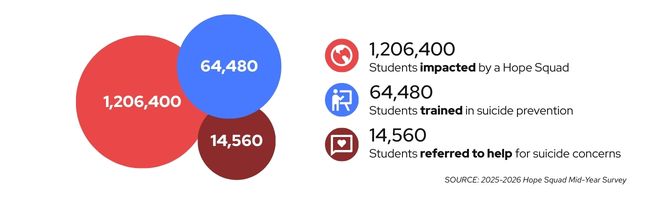
This impressive reach results in meaningful safety outcomes:
- More than 14,000 students have been referred for help
- 42% of those referred for help were related to direct suicide concerns
These referrals reflect reduced stigma around seeking help, along with demonstrating the strength of Hope Squad systems to ensure concerns are brought to trusted and trained adults. By encouraging early concern reporting, schools shift their focus upstream—addressing warning signs before they escalate—rather than relying solely on downstream crisis response after a situation has already reached a critical point.
Program value
Schools consistently describe Hope Squad’s impact as invaluable.
The survey found that the program results in:
- Early identification of students in need
- Increased student belonging
- Reduced stigma around mental health
- Meaningful student leadership development
Together, these outcomes reflect a prevention model that strengthens both protective factors for individual students as well as the safety of the broader school environment.
What this means for schools and communities
The Mid-Year Survey results underscore a powerful truth: Prevention is possible, and culture change is achievable.
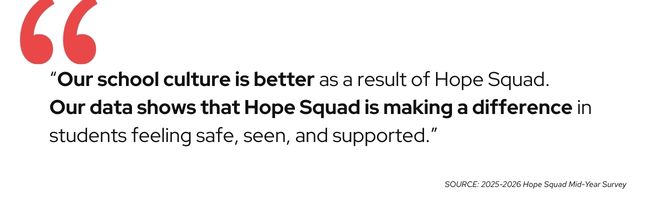
Schools of all sizes and demographics are finding success with Hope Squad because the program adapts to their unique needs while maintaining evidence-aligned practices. Whether in rural towns, suburban communities, or urban centers, the core principles remain the same:
- Peer-to-peer connection saves lives
- Early intervention prevents crises
- Student leadership builds resilient communities
- Mental health conversations reduce stigma and increase understanding
Building a future of hope and connection
The results are more than numbers—they represent students helping students, schools becoming stronger communities, and prevention systems that save lives.
As we move forward, Hope Squad’s commitment remains the same—building schools where every student feels valued, supported, and empowered to help others. It’s important that we continually evaluate and improve our program, so that together we can eliminate suicide in schools.
Thank you to the educators, Advisors, Members, and communities who make this work possible. Together, we are champions for safer, more connected schools.
Share


%201.png)